
Discover Ritucharya
Find Balance as the Season is Changing

How do the final months of the year find you? How are the qualities of your thoughts as your schedule changes and new stimuli vie for your attention? How does your body feel as you slip on warmer layers and reintroduce Fall’s harvest to your diet? However you answer these questions, you’ll notice the season is changing and so are you.
Ayurveda invites us to listen to the forces that are shifting within and without, and to recalibrate our habits wherever that may serve us. At Sarvaa, these ancient wisdoms inform our superfood formulas, our daily habits, and the mindful attention we pay to the universe during this season of Sharad.
Sharad Ritu (The Autumn Season)
Sharad Ritu is one of six seasons in Ayurveda’s calendar—Ritu meaning season and Sharad meaning Autumn. In India’s diverse climate, Sharad comes after the monsoon season (Varsa Ritu) and is characterized by an abrupt return of hot weather before early winter (Hemanta Ritu) begins. This season can aggravate those whose internal fire already burns hot (Pitta dosha dominant people). Therefore, Ayurveda traditionally advises cooling foods to counteract the heat that rises in the body and in the atmosphere1.

Ritucharya
Of course, dear reader, you may not live in a climate where Autumn brings heat, nor may your dosha be predominantly Pitta. You may live in a more temperate climate where Fall is marked by a dry chill in the air. Your dosha may be predominantly Vata, in which case a warming stew may help counteract the dry, cool, qualities of your dosha. Your unique constitution and place upon this planet call for unique treatment2.
Ayurveda does not contraindicate certain foods or habits based on the month displayed on your calendar, rather it seeks to adjust to the changes that come throughout the year. This cycling of seasonal conduct is called ritucharya1,2. This core principle of Ayurveda offers seasonal changes to diet, lifestyle, and self-care regimens3.
Shift Your Routine with the Cycle of the Seasons
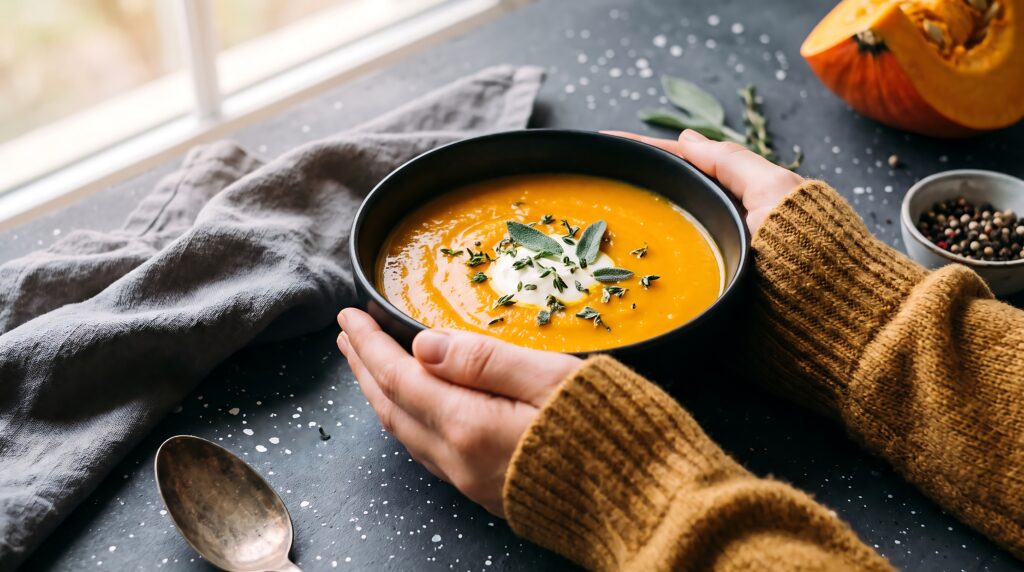
We find that our behaviors and preferences naturally change throughout the year. We seek the warmth of a fireplace over the shade of a tree in the park. We say goodbye to grilled sweetcorn and welcome back stewed root vegetables. These Fall traditions are natural and met without resistance.
On the other hand, we may find that we cling too tightly to a regimen or habit that does not serve us in the present. For example, perhaps your morning routine involves a cold plunge after a vigorous workout. As the mornings grow darker and your schedule becomes fuller, you may find that your skin is drying out, you have become more anxious, and your once invigorating morning ritual now feels like a punishment.
Ritucharya calls for a subtle change. Within the Ayurvedic tradition, like increases like, so it follows that the cold shock to the body experienced in the controlled environment of your tub would increase the frigidity of the natural world. The Autumn season is a time for warmth and comfort to counteract the cold. Consider taking a break from cold plunges and treat yourself to a hot oil massage. You may find a new appreciation upon your return to your warmer season ritual.
Sarvaa’s Quick tips for Fall
Change is often unwelcome. Perhaps you dread colder weather, shorter days, and the strain that often accompanies Fall. This is quite normal. We encourage you to invite one simple warming ritual into your Autumn days.
- Make a cozy cup of raw cacao. For a sweet, comforting beverage with no added sugar and artificial ingredients, try our Conscious Cacao. It tastes just like hot cocoa and is comprised entirely of nutrient dense ingredients.
- Eat more pumpkin. Pumpkin seeds are a nourishing, plant-based source of protein. Roast pumpkin seeds and carve pumpkins with friends and family for a healthy and festive activity. You will also find pumpkin seed protein in our 30g and other nutrient-enhanced protein powders.
- Support your resilience. Take a daily serving of Superfruit C as the chill in the air grows stronger. It’s packed with camu camu and other fruits known for their high concentration of vitamin C, an important nutrient that supports normal immune function.
However you embrace the changing season, do it with patience, grace, and humility. In the spirit of ritucharya, allow yourself to welcome new and supportive practices into your regimen while letting go of that which may hold you back. And remember—love your body, love everybody!
Sources
- "Charaka Samhita Part 6: Sutrasthana Chapter 6 (Tasyashitiya Adhyaya) — Ritucharya: Seasonal Eating and Routines for Year-Round Strength." AyurvedaHub.in. Last modified September 12, 2026. https://ayurvedahub.in/blogs/ayurvedic-wellness/charaka-samhita-part-6-sutrasthana-chapter-6-ritucharya-seasonal-routine.
- Lacaille, Clément. ayurveda-guide.com. Last modified July 9, 2026. https://guide-ayurveda.com/rituals/ritucharya/.
- Thakkar, J., Chaudhari, S., & Sarkar, P. K. (2011). Ritucharya: Answer to the lifestyle disorders. Ayu, 32(4), 466–471. https://doi.org/10.4103/0974-8520.96117
- Shree Gulabkunverba Ayurvedic Society. Charaka Samhita. Varanasi: Chaukhamba Sanskrit Series Office, 1949. https://www.wisdomlib.org/hinduism/book/charaka-samhita-english/d/doc627516.html.
Disclaimer:
Insights are based on nutritional science, naturopathic principles, Ayurveda, and traditional herbal practice. Ingredient benefits reflect historical use and modern research on nutritional composition. Educational use only. This information is not medical advice and is not intended to diagnose, treat, cure, or prevent any disease. Statements have not been evaluated by the FDA.